
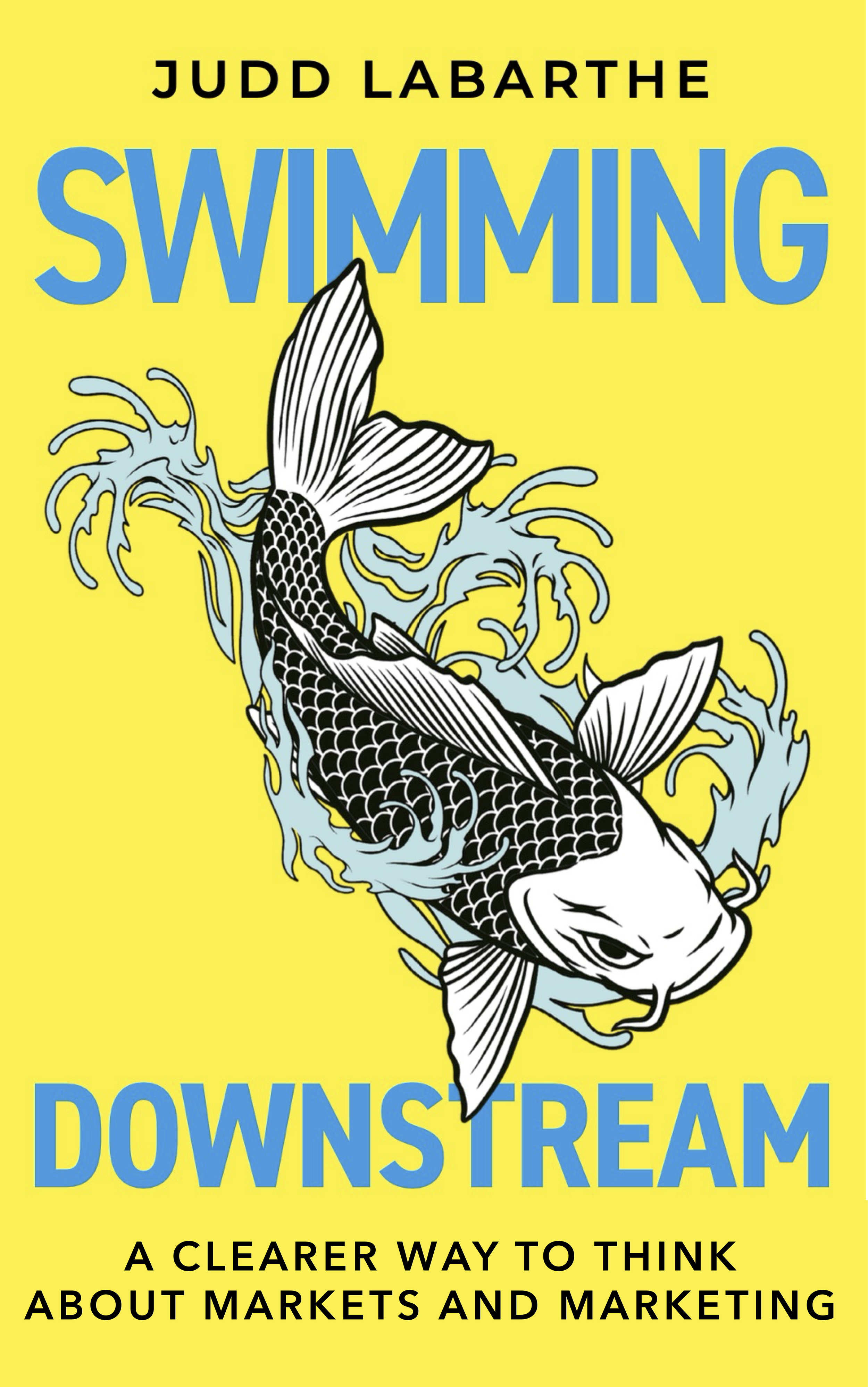
The book.
Marketing is too important to misunderstand. Businesses rely on it to grow and compete, which makes it worth knowing how marketing actually works — especially where that differs from how we might expect, or wish.
If you’ve ever watched a campaign hit its targets without seeming to change much, wondered why strong awareness hasn’t translated into growth, or sat through a meeting devoted to what customers think about the brand while nobody asks whether they think of it when they’re ready to buy, you’ve encountered that gap.
Markets aren’t waiting for marketers to set them in motion. People already buy in characteristic ways, under particular conditions, for reasons and occasions of their own. Brands compete within those existing currents. Understanding them changes the question from how to make people behave differently to how to make your brand easier to buy when buying happens.
That shift can make familiar marketing evidence look different. What people think about a brand matters, for example — but often less than when they think of it at all. Awareness, loyalty and campaign response can all tell us something useful, but not necessarily what we assume they do. Apparently sensible marketing decisions can look very different once we understand the market conditions surrounding them.
Swimming Downstream brings together bodies of thinking that marketers often encounter separately, if at all: empirical research into how brands grow and buyers behave, and strategy’s emphasis on choices, constraints and competition. Combined with real-world cases and experience, they offer a way to look beyond individual marketing efforts and understand the conditions in which those efforts succeed, fail, or mean something different from what the numbers initially suggest.
The result is practical without being prescriptive: a simple discipline for diagnosing what’s happening, deciding what makes sense under the conditions you find, and assessing what actually changes as a result.
Swimming Downstream isn’t a playbook or a collection of marketing formulas. It offers a clearer way to understand situations you may already recognize — the meetings you’ve sat through, the numbers you’ve puzzled over, the decisions that seemed sensible at the time — so that the next time you encounter them, you’ll see more of what’s actually going on and have a better idea what to do next.
(Note: this is the revised edition of the book originally published in 2025, with a few important corrections, expansions and other refinements.)
Selected responses to the book.
“A significant commentary on a discipline that too often lacks discipline…this is Jedi-level stuff.”
— Simon Pont, author, The Better Mousetrap
“Crushes conventional wisdom…with a deft combination of rigor, creativity and a conversational style.”
— Marty Horn, former SVP/Group Strategic Planning Director
“Positions itself between intricate models and instinctive creativity…forward-looking and action-inspiring.”
— Elisabeth Unverricht, Principal Strategy Consultant
“A thoughtful, analytical approach to rethinking marketing with a focus on long-term success.”
— Stephen Ban, former Fortune 500 CMO